Published on
Updated on
Originally published May 2026.
On April 22, MU faculty mentors, staff, and families gathered for the 37th Annual McNair Scholars Conference, a celebration of the scholarly work and achievements of the 2025-2026 McNair Scholars, and a cornerstone of our emphasis on exploration and discovery. The conference marked the culmination of a year of rigorous, inquiry driven work and featured 22 scholar-led projects spanning a wide range of disciplines across MU’s schools and colleges. Delivered in both oral and poster formats, the presentations highlighted the breadth and depth of undergraduate research on campus and underscored the integral roles of faculty mentorship and the McNair Program in preparing scholars to navigate the expectations and transitions associated with graduate education and future scholarly pursuits.
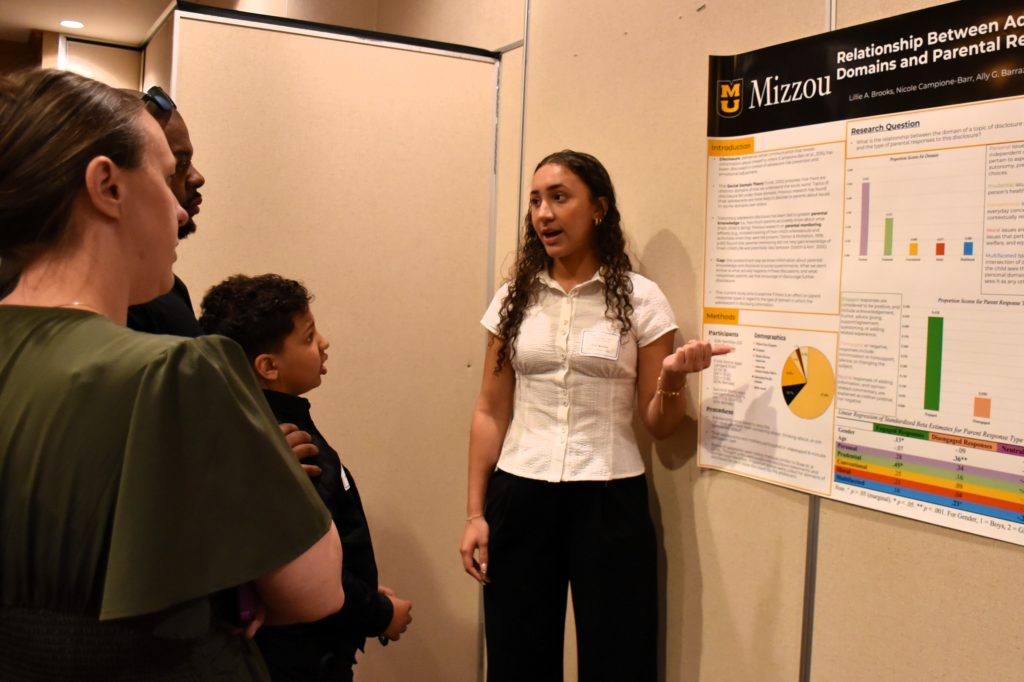
Click here to view the full conference program with student names and presentation titles.
Celebrating the 2026 graduating scholars
A hallmark of the McNair Scholars Conference is the opportunity to come together to celebrate both the scholarly accomplishments of our students and the vital mentorship provided by our faculty partners. This tradition recognizes the intellectual growth, persistence, and research excellence of our scholars while honoring the tremendous contributions of the faculty mentors who support them throughout their academic journeys. The conference also serves as an important moment to mark what comes next. For the majority of our graduating McNair Scholars, the next phase of their academic journey will begin this upcoming fall semester, as they matriculate into graduate and professional programs across the country. We are so proud to celebrate this milestone with our campus community.
- Blake Arciga (2024-2025 scholar), MD/PhD program at University of Cincinnati
- Trinity Mitchell (2024-2025 scholar) Dietetics Master’s Program at University of Missouri
- Julian Fletcher (2024-2025 scholar) Computer Sciences Master’s Program at University of Missouri
- Olivia Smith (2024-2025 scholar), Clinical Psychology PhD program at University of Iowa
- Antonio Flores, Pure Mathematics Master’s Program at University of Central Missouri
- Jayda Gooch, Clinical Psychology PhD program at St. Louis University
- Vanessa Truong, Master’s in Social Work at Washington University in St. Louis
- Vy Vu, Master’s in Health Administration at University of Missouri
- Tayler Wiederhold, Master’s in Quantum Computing at University of Wisconsin-Madison
- Adrianna Williams, Master’s in Environment, Natural Resources and Society at University of Wyoming
Advancing the mission and legacy
The TRIO Ronald E. McNair Postbaccalaureate Achievement Program was established by Congress in 1986 as part of the Higher Education Act to address persistent inequities in doctoral attainment. Named in honor of Dr. Ronald E. McNair—an accomplished MIT PhD graduate, laser physicist, and NASA astronaut who was killed in the 1986 Space Shuttle Challenger disaster—the first McNair grants were awarded in 1989, marking the formal launch of the program at institutions across the country. Through competitive grants administered by the U.S. Department of Education, colleges and universities were charged with designing intensive, faculty‑mentored experiences that mirror the expectations of graduate study.
The University of Missouri has played a leading role in this national effort since the program’s inception and was among the first fourteen institutions in the country to receive McNair funding. For more than three and a half decades, Mizzou’s McNair Scholars Program has advanced this mission through intentionally structured research experiences, faculty mentorship, graduate‑level academic preparation, and professional development, all designed to prepare participants for the rigor and culture of doctoral education.
To date, the program has served 731 scholars, resulting in 204 doctoral degrees, over 250 master’s degrees, and 55 scholars currently pursuing graduate study—clear evidence of its sustained success. Since 2015, the program has continued to build momentum, averaging seven doctoral graduates each year. While fewer than 2% of the general population earn a PhD, these outcomes underscore the program’s exceptional effectiveness and its ability to expand access to advanced academic achievement.
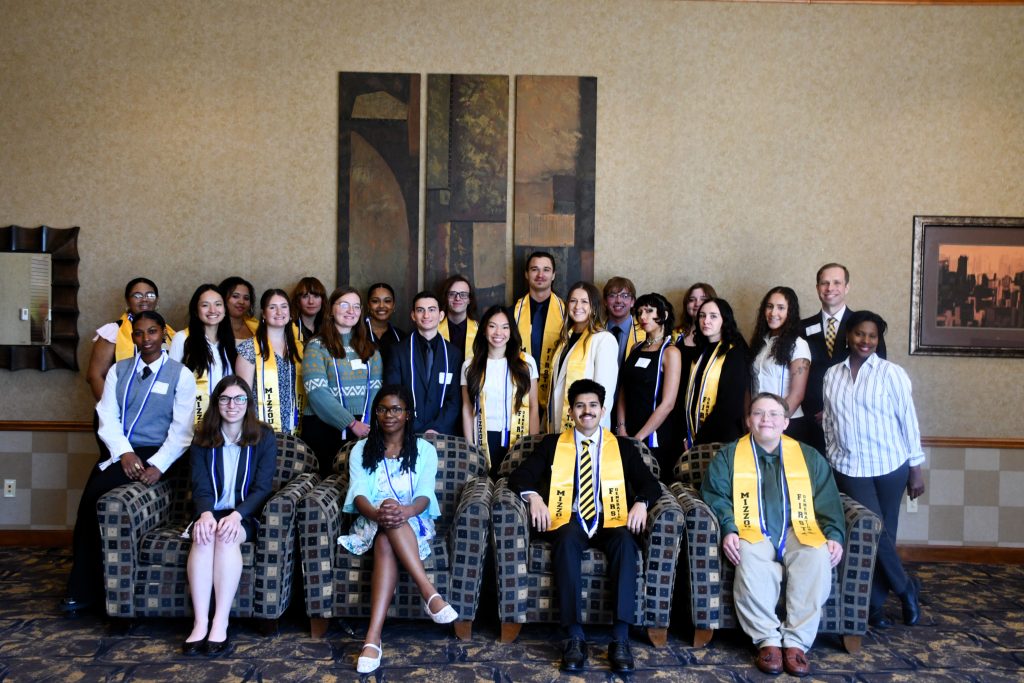
2025-2026 MU McNair Scholars
| Scholar Name | Scholar Major | Faculty Mentor | Mentor Department |
|---|---|---|---|
| Grace Anderson | English | Sarah Buckner | English |
| Lillie Brooks | Psychology | Nicole Campione-Barr | Psychology |
| Tragan Chambers | Psychology | Nicholas Gaspelin | Psychological Sciences |
| George Dimas | Computer Science | Mert Korkali | Computer Science |
| Nya Dodd | Psychology and Philosophy | Sean Lane | Psychological Sciences |
| Ellie Dugdale* | Physics | Yicheng Guo | Physics |
| Armani Elzein | Physics and Math | Thomas Heitman | Physics |
| Vanya Ewlwile | Biological Sciences | Sen Xu | Biological Sciences |
| Antonio Flores* | Mathematics and Math Education | Chuck Munter | Learning, Teaching and Curriculum |
| Jayda Gooch* | Psychology | Donte Bernard | Psychological Sciences |
| Alyssa Hansell | Psychology and Sociology | Keely Dugan | Psychological Sciences |
| Ryn Kreitz* | Plant Sciences | Deborah Finke | Plant Sciences |
| Mathias Lobb | Geology | Sarah Jacquet | Geological Sciences |
| Serenna Pride | Psychology | Brett Froeliger | Psychological Sciences |
| Makenna Shifflett | Biochemistry | Wipawee Winuthayanon | Obstetrics, Gynecology and Women’s Health |
| Joseph Tietze | Aerospace Engineering | Craig Kluever | Mechanical and Aerospace Engineering |
| Jose Torres-Gomez | Information Technology | Kristofferson Culmer | Engineering and Information Technology |
| Vanessa Truong* | Psychology | Jeffrey Johnson | Psychological Sciences |
| Vy Vu* | Health Science | Wilson Majee | Health and Rehabilitation Science |
| Madilynn Wehmeyer | Agriculture Education | Rebecca Mott | Agriculture Education |
| Tayler Wiederhold* | Physics | Haojing Yan | Physics |
| Adrianna Williams* | Environmental Science and Political Science | Robin Rotman | Natural Resources |
Table of 2025-2026 McNair Scholars. *denotes Spring 2026 graduating seniors
Planting seeds of discovery
Originally designed to support recruitment for the McNair Scholars Program, the Scholar Prep Program introduced students to graduate education and assisted in preparing them for the McNair application process. It provided foundational exposure to pathways to advanced study, while creating a supportive environment where students could begin forming connections with peers who shared similar goals. As the program evolved, student feedback became a critical driver of its growth. Participants consistently expressed appreciation for the program’s emphasis on community-building and articulated a clear desire for continued engagement beyond the initial preparatory experience. They wanted more sustained opportunities that would support their long-term goals.
In response to student feedback, the program expanded both in scope and intentionality, evolving into theDiscover Program—making the shift from a short-term, recruitment-focused initiative to a comprehensive model. Designed to engage students even earlier in their academic journeys, Discover provides ongoing support through structured programming, mentorship, academic and career development workshops, and graduate education opportunities. While remaining grounded in its role as a pipeline to the McNair Scholars Program, its broadened mission empowers students to build not only the technical skills for advanced study but also the confidence, resources, and clarity needed to persist and succeed.
This year, 50 undergraduate students completed Discover and Discover STEM programs. As a component of the programs, underscoring the significant focus on graduate school preparation, these scholars participated in two research modules led by MU faculty: the Missouri Mortality Project, led by Dr. Carolyn Orbann (Fall 2025) and nanomaterials and clean water access, led by Dr. Reginald Rogers (Spring 2026). Through these modules, scholars experience the rigor of academic scholarship in a hands-on, accessible format. They also build a strong faculty network, crucial in the exploration of future academic opportunities, such as McNair Scholars. Of the 2025-2026 MU McNair Scholars, five were once Discover students.